
News


Blackfoot Confederacy Chiefs Society to Host Gathering for Treaty and Unity
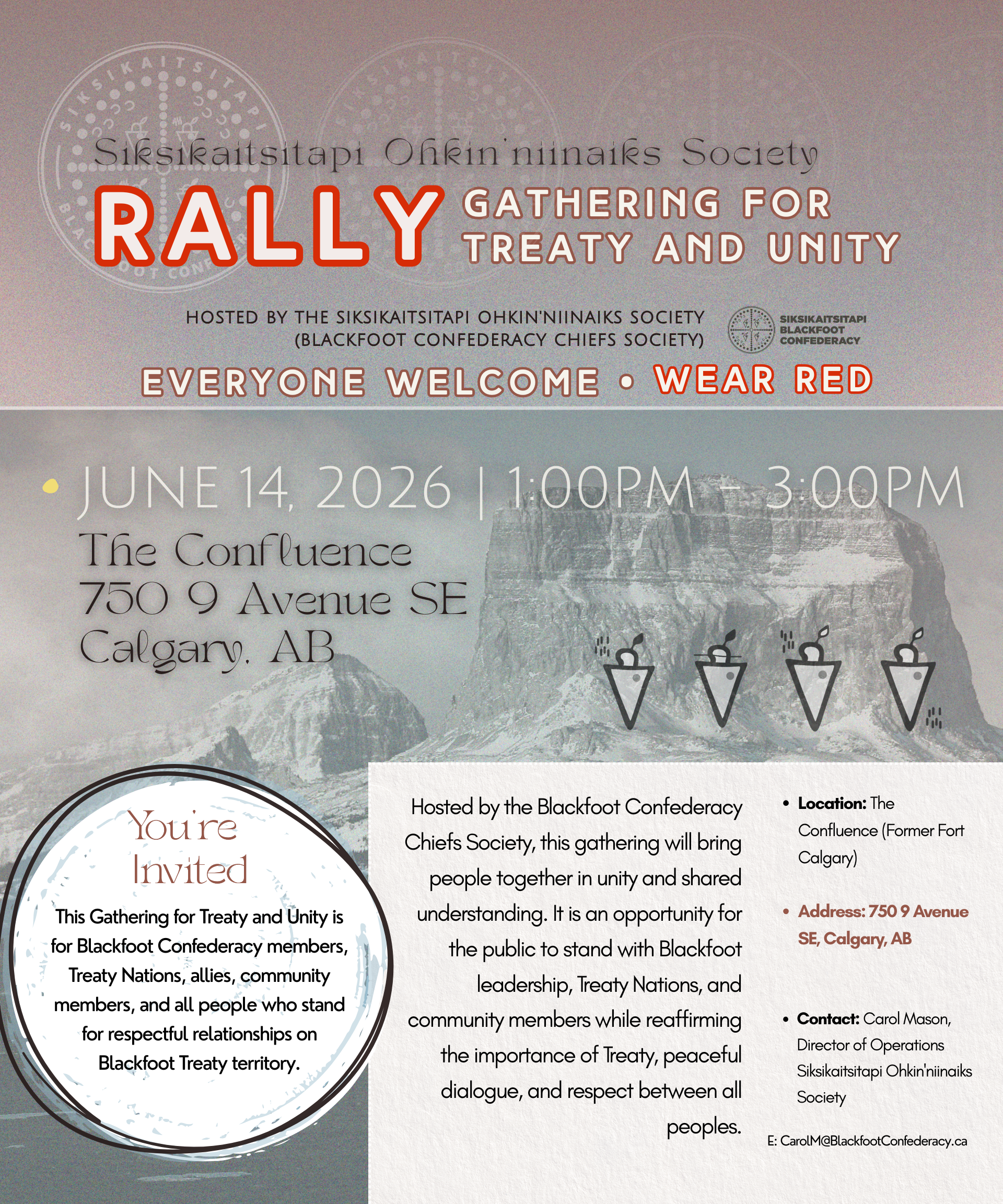
The Blackfoot Confederacy Chiefs Society will host a Gathering for Treaty and Unity on Sunday, June 14, 2026, from 1:00 PM to 3:00 PM at Fort Calgary. The gathering is open to Blackfoot Confederacy members, Treaty Nations, allies, community members, and the public. It will provide a space for people to come together in respect and shared understanding while standing in support of Treaty relationships and unity on Blackfoot Treaty territory.
Blackfoot Confederacy Chiefs Affirm Court Decision on Alberta Separation Petition
The Court of King’s Bench has affirmed what the Blackfoot Confederacy and Treaty First Nations have maintained throughout this process: Alberta separation directly impacts Treaty rights and cannot proceed without First Nations. The ruling reinforces that Blackfoot Treaty 7 remains a living and constitutionally protected agreement guiding how these lands are shared and governed.
Cassie Ayoungman Represents Destination Blackfoot at Indigenous Trailblazers Summit 2026
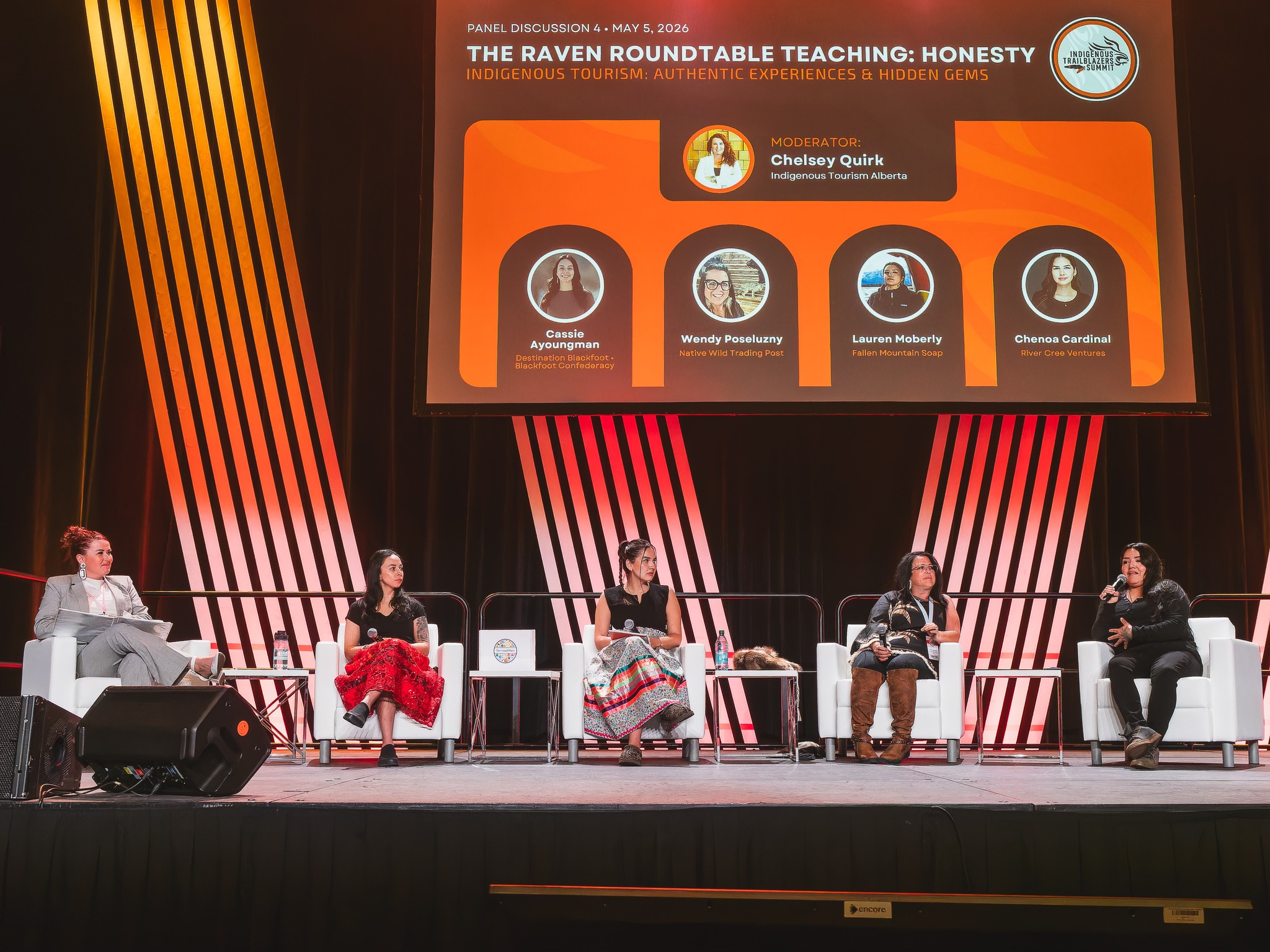
Blackfoot Confederacy Tribal Council was represented at the Indigenous Trailblazers Summit 2026 in Edmonton by Cassie Ayoungman, Promotions Coordinator for Destination Blackfoot and founder of Soul of Miistaki. Cassie joined Indigenous leaders to highlight Indigenous tourism, authentic experiences, and the Blackfoot stories, businesses, and landscapes that continue to shape Blackfoot Territory, known as the Backbone of the World.
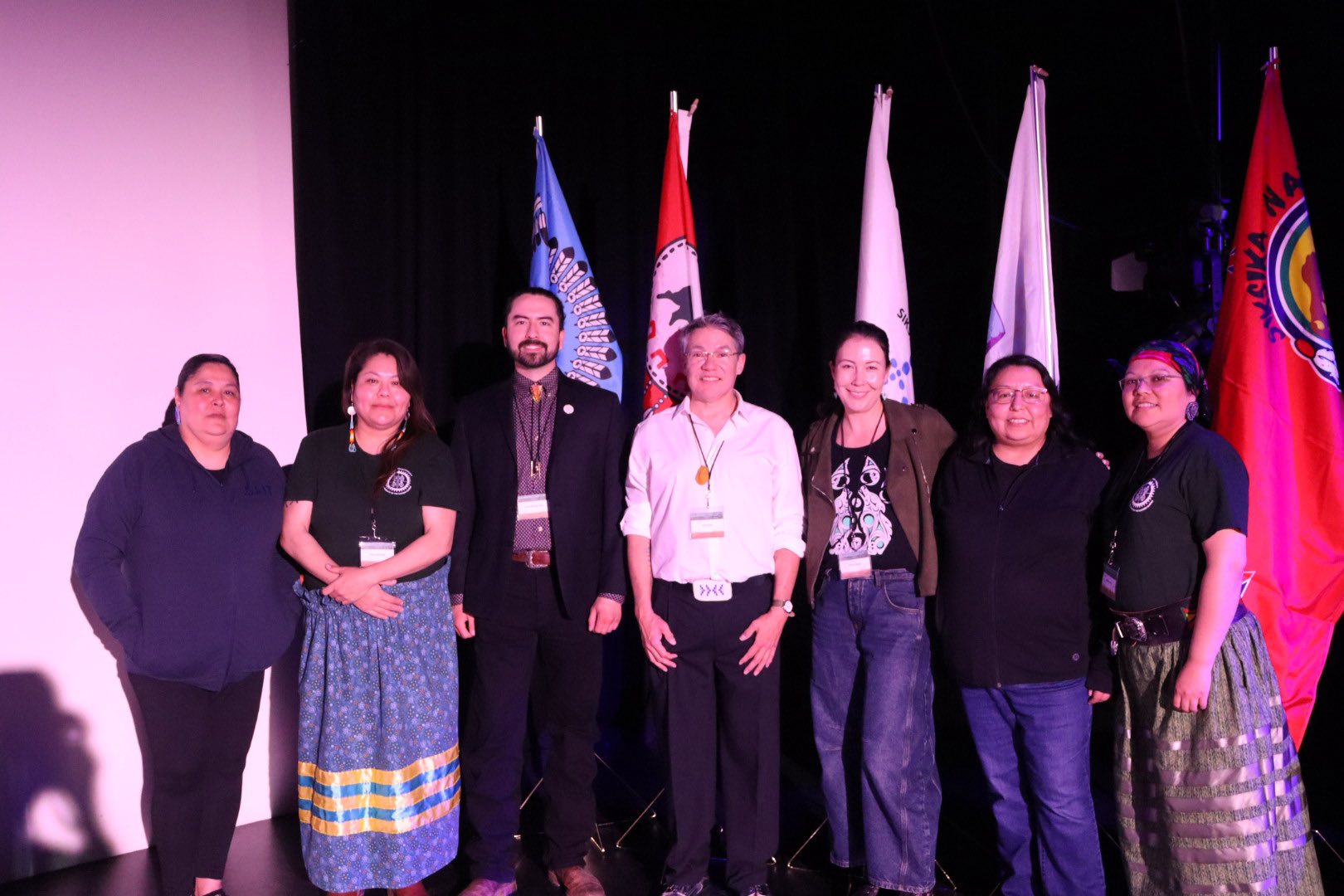
Guardians Work Across Blackfoot Territory Highlighted at 2026 Gathering
On April 29 and 30, 2026, the Blackfoot Confederacy Tribal Council brought together Guardians, Elders, youth, and partners at Blackfoot Crossing Historical Park for the Blackfoot Guardians Gathering 2026 under the theme *Aiskska’tsii’p Ksahkomm – Protecting the Land*. The gathering advanced a unified Blackfoot approach to stewardship grounded in Niitsitapi knowledge and authority, with acknowledgment to all presenters, Elders, youth, attendees, Blackfoot Confederacy staff, and the staff at Blackfoot Crossing Historical Park for delivering the event.
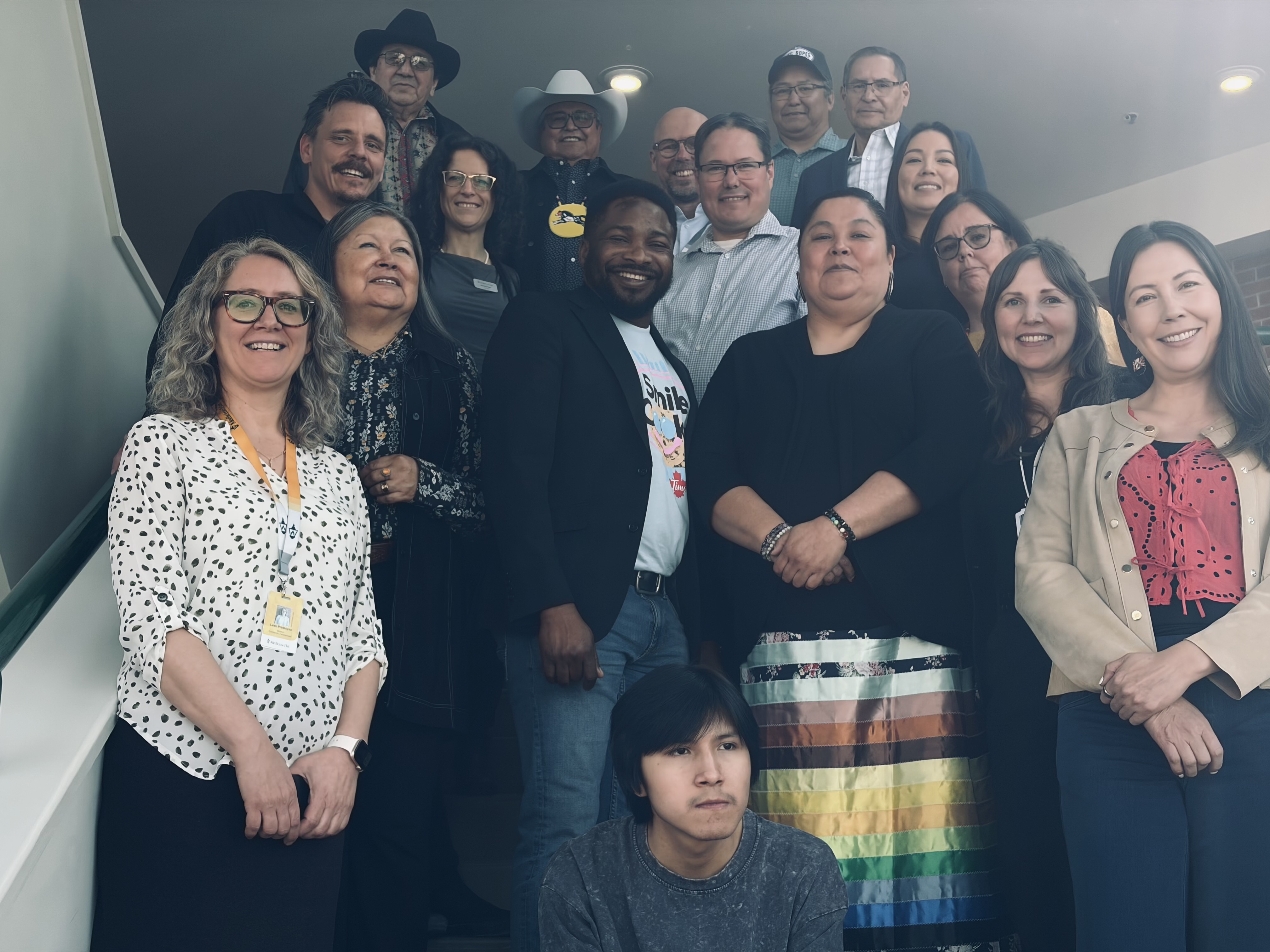
Blackfoot Confederacy Engages with Medicine Hat Toward Future Agreement
The Blackfoot Confederacy Tribal Council held its first formal meeting with the administration of Medicine Hat on April 30, establishing a foundation for intergovernmental collaboration and future engagement. The city’s name originates from the Blackfoot word “Saamis,” meaning “medicine man’s hat,” as both sides now work toward a potential Memorandum of Understanding targeted for the fall.
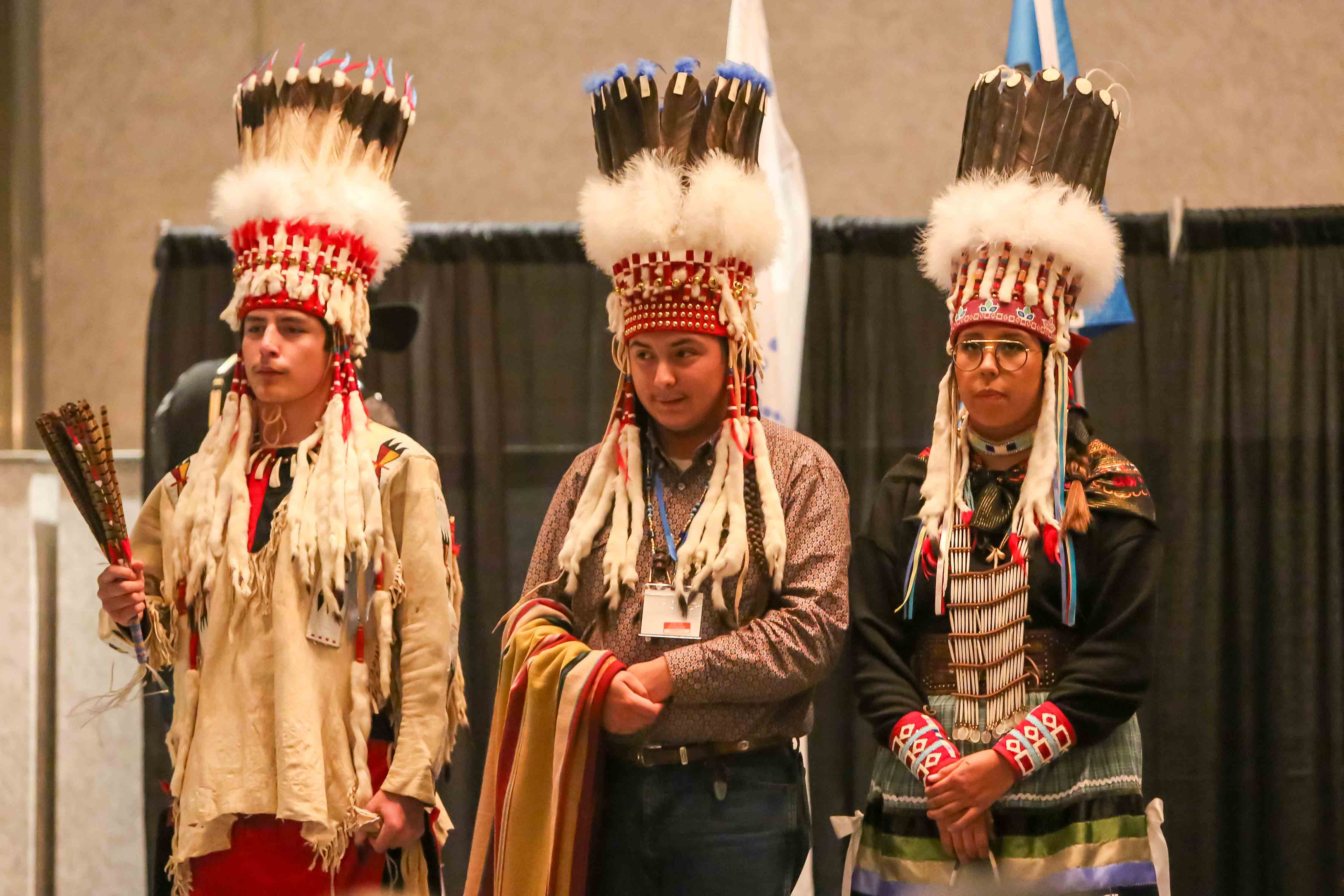
Elders, Youth, and Leaders Shape Path Forward at third annual Blackfoot Justice Symposium
The Blackfoot Confederacy Third Annual Justice Symposium, INNAIHTSIIYISINNI – Our Sacred Treaty’s, brought together Elders, youth, leadership, and community members April 21–22, 2026, in Sikóóhkotok, reaffirming Blackfoot law, responsibility, and the continued strength of Niitsitapi justice systems grounded in culture, knowledge, and collective direction.
Destination Blackfoot Operators Featured in Conde Nast Story
Destination Blackfoot has been featured in Condé Nast Traveler in an April 11, 2026 story that presents Blackfoot Country as one homeland across the medicine line. The feature profiles Blackfoot operators and experiences across all four Nations, reinforcing that this is Blackfoot land, shared through Blackfoot voices, and led by Blackfoot people.
Blackfoot Confederacy Chiefs Respond to Court Ordered Pause on Alberta Separation Petition
On April 10, 2026, the Court of King’s Bench issued a decision to pause the Alberta separation petition process. In response, the Chiefs of the Blackfoot Confederacy released the following statement, reaffirming that Treaty rights and constitutional obligations must be addressed before any further steps are taken.
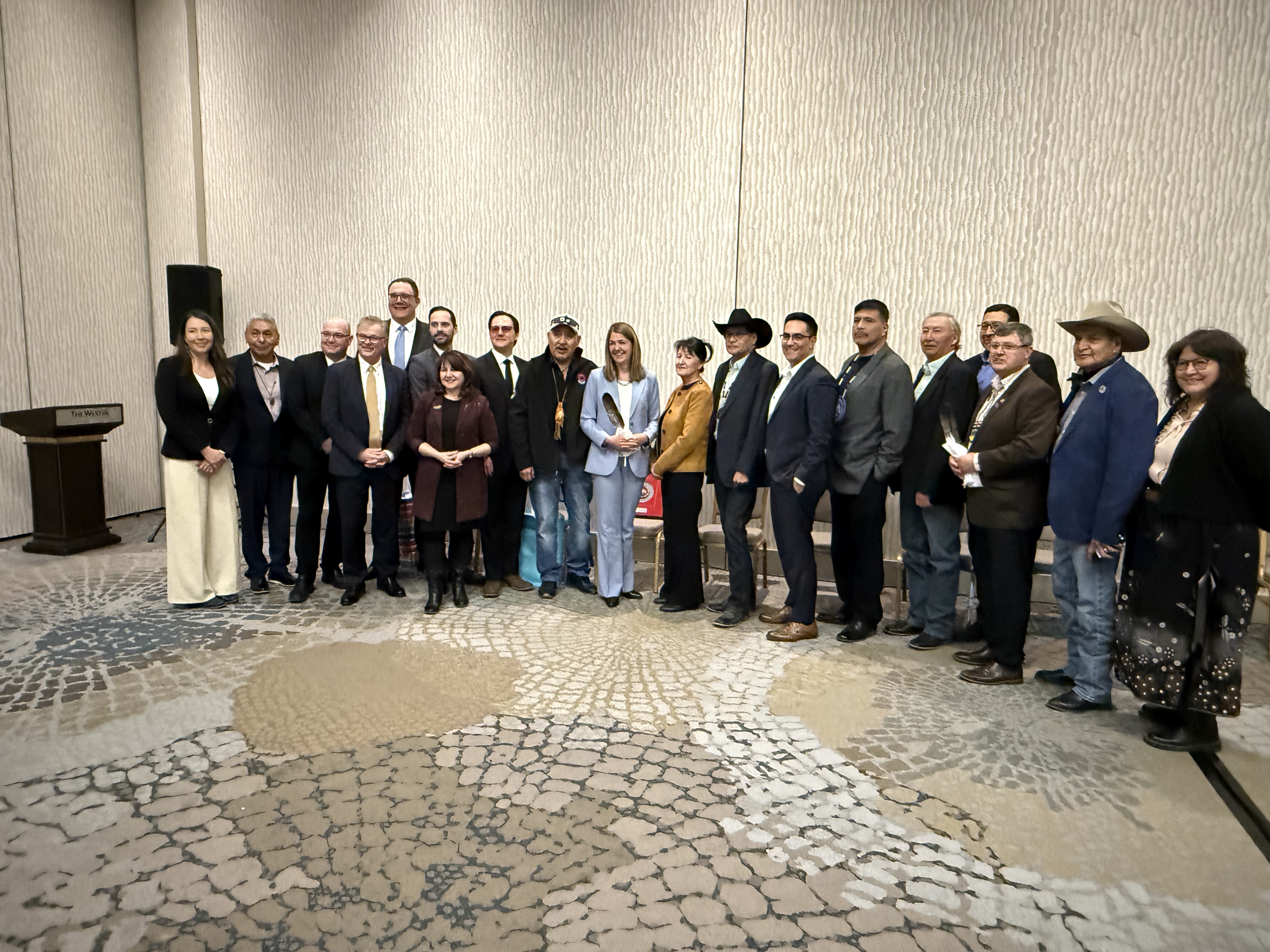
Blackfoot Confederacy Confronts Division and Advances Priorities in Premier Meeting
April 7, 2026 – The Blackfoot Confederacy Tribal Council met with Premier Danielle Smith and Ministers at the Westin Calgary Airport for its annual leadership meeting, held each year since 2017 under the Protocol Agreement—the longest running agreement of its kind with the Government of Alberta—focused on advancing shared priorities and reviewing annual progress. Hosted by Kainai (Blood Tribe), the meeting brought together leadership from all four Nations, including Amskapi Piikani Chairman Rodney Gervais, and was identified as productive, with continued commitment to strengthening Nation-to-Nation collaboration across key sectors.
Blackfoot Confederacy Receives Funding Through City of Calgary Indigenous Housing Program
Announced March 16, 2026, the program awarded $33 million to 16 Indigenous Nations and Indigenous-led non-profit organizations to support 24 projects that are expected to deliver up to 379 new non-market homes for Indigenous residents living in Calgary.
Blackfoot Confederacy Seeks Input from Its Members on Jordan’s Principle Access
The Blackfoot Confederacy, through Health Co-management (HCoM), has launched a survey specifically for its member caregivers who have accessed Jordan's Principle aiming to evaluate the program's implementation in Alberta. This anonymous 15-minute survey open until April 30, 2026, offers entry into a prize draw and will inform recommendations to improve service coordination for Blackfoot children and families.
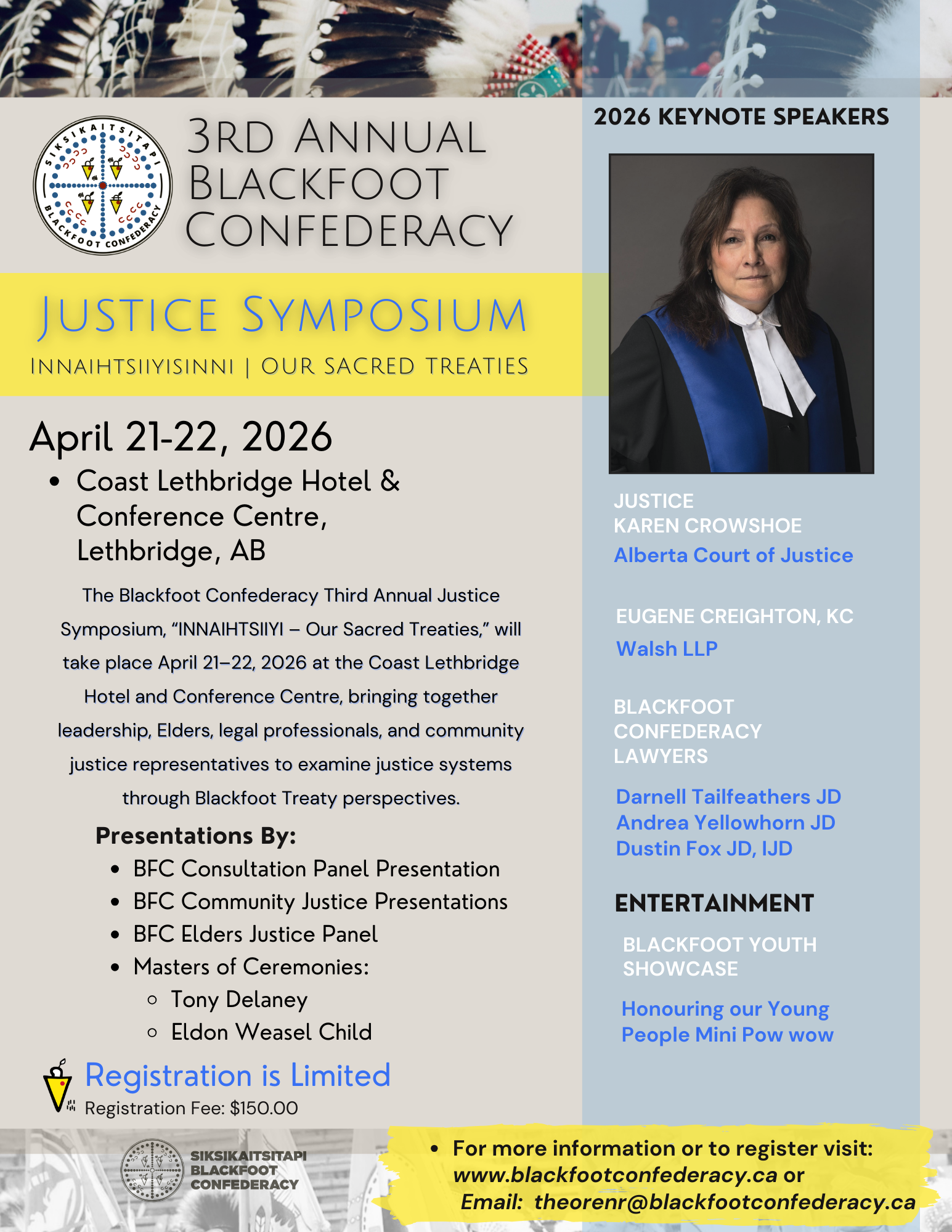
2026 Blackfoot Confederacy Justice Symposium – registration
The Blackfoot Confederacy Third Annual Justice Symposium, “INNAIHTSIIYI – Our Sacred Treaties,” will take place April 21–22, 2026 at the Coast Lethbridge Hotel and Conference Centre, bringing together leadership, Elders, legal professionals, and community justice representatives to examine justice systems through Blackfoot Treaty perspectives. Registration is $150 per participant and includes symposium sessions, meals, and the evening banquet and youth showcase, with registration open until April 10, 2026 through Eventbrite. https://2026BFCJusticeSymposium.eventbrite.ca