Fiction vs Fact: Alberta Métis Rights Assertions in Blackfoot Treaty 7 Territory| series 1
This post launches a five-part educational campaign by Blackfoot Confederacy Tribal Council—separating fiction from fact, correcting misinformation, and protecting Blackfoot and First Nations’ rights.
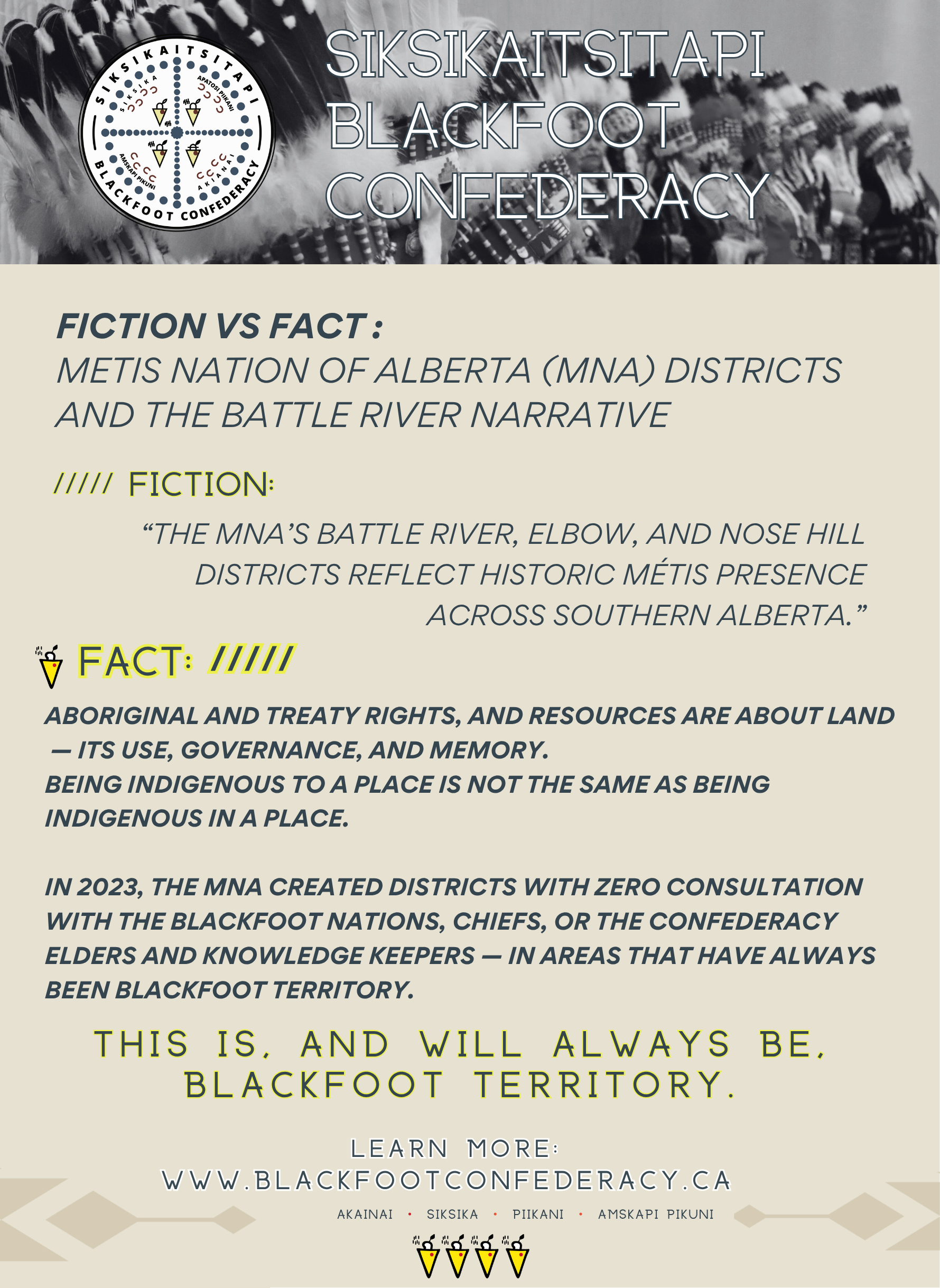
Week 1 — Districts and the Battle River Narrative
Fiction:
The size and boundaries of the “Métis Nation Homeland” can be determined by the Métis Nation of Alberta’s modern-day district assertions—such as Battle River, Calgary Elbow, and Calgary Nose Hill—without reference to historical facts or pre-existing Blackfoot occupation of these lands.
Fact:
Aboriginal and Treaty rights, and Resources are about land—its use, governance, and memory.
Being Indigenous to a place is not the same as being Indigenous in a place.
In 2023, the Métis Nation of Alberta District Boundaries Act created new provincial districts with zero consultation with the Blackfoot Nations, Chiefs, or the Confederacy Elders and Knowledge Keepers—in areas that have always been Blackfoot Territory.
The Battle River, Elbow, and Ootssapi’tomowa (Nose Hill) lie within or beside the homelands of the Siksikaitsitapi—Siksika, Kainai, Aamsskáápipikani, and Aapátohsipikani—who have governed, hunted, and held ceremony here since time immemorial.
The Battle River and Wetaskiwin:
The Battle River was named for early conflicts between the Cree and Blackfoot.
Peace followed and was commemorated at Wetaskiwin—from wîtaskîwinihk, “the hills where peace was made.”
That peace affirmed boundaries and respect, not shared jurisdiction.
Blackfoot Placemaking and Living Presence:
- Mohkinstsis (Elbow) — the meeting of the Bow and Elbow Rivers, a Blackfoot governance and trading site for millennia.
- Ootssapi’tomowa (Nose Hill) — a sacred high point, observatory, and renewal-ceremony site. Hundreds of tipi rings, cairns, and buffalo kill sites mark continuous Blackfoot occupation. At its summit stands the Siksikaitsitapi Medicine Wheel (2015), a visible affirmation that Blackfoot sovereignty and ceremony endure today. The structure is a Siksikaitsitapi landmark, following our tradition of leaving a marker wherever we travel within our homeland. Designer Andy chose symbols that tie us to our roots, traditions, values, worldview, and territory—understanding the importance of placing landmarks within Siksikaitsitapi territory to reinforce our kinship with the land and to signal to others that these are the lands of the Blackfoot Confederacy.
- Okotoks (Rock) — from o’kotok, “rock.” A teaching site in Napi stories about respect and responsibility.
Blackfoot Names Define the Land:
Mohkinstsis (Elbow) | Ootssapi’tomowa (Nose Hill) | Okotoks (Rock) | Ponoka (Elk)
Each name anchors diplomacy, language, and stewardship that predate any provincial boundary or 2023 map.
The Truth:
In 2023, the MNA’s district system attempted to overlay a new narrative on Blackfoot land. These boundaries do not reflect historical presence, governance, or Nationhood. They are administrative creations—not truths of place.
A newly recognized provincial group that believes it has some Indigenous ancestry cannot declare a Nation into existence where one never was, nor redefine lands that already hold their own Treaty and sovereignty.
It has always been Blackfoot Territory.
A Message of Gratitude:
Blackfoot Confederacy Tribal Council thanks all allies, knowledge keepers, and community members who continue to stand with us in truth and unity.
We are strengthened by the support of First Peoples across these lands and beyond, and we acknowledge the many Nations and Métis citizens who have spoken out against the MNA’s actions and stood in solidarity with the Blackfoot Confederacy.
Together, we uphold the truth that has never changed
this is, and will always be, Niitsitapi Blackfoot Territory.